
How Do Designers Plan Layouts Before Purchasing Furniture?
If you're investing in a custom home, luxury remodel, or professionally designed interior, one of the most common questions is: How do designers plan layouts before purchasing furniture?
Many homeowners assume furniture selection begins with choosing sofas, chairs, tables, and accessories. In reality, experienced designers start with space planning long before any furniture is ordered. Every successful interior begins with understanding how people will live, move, gather, work, and relax within the space.
The goal isn't simply to fill a room with beautiful furniture—it's to create a layout that functions effortlessly while supporting the overall design vision.
This guide breaks everything down in a clear, practical way so you can understand how professional designers create furniture layouts before making purchasing decisions.
Quick Answer
Before purchasing furniture, designers typically:
Measure the space
Review architectural plans
Understand how the room will be used
Create scaled floor plans
Map traffic flow patterns
Determine furniture sizes
Test multiple layout options
Identify focal points
Balance aesthetics and functionality
Finalize layouts before ordering products
Professional designers plan the room first and select furniture second.
Why Space Planning Matters
Furniture is one of the largest investments in most interior design projects.
Without proper planning, homeowners often encounter:
Furniture that doesn't fit
Crowded rooms
Awkward traffic flow
Poor sightlines
Uncomfortable seating arrangements
Costly replacement decisions
Space planning helps prevent these problems before any purchases are made.
Start With Understanding How the Space Will Be Used
Every room serves a purpose.
Before considering furniture, designers typically ask:
How Will the Room Function?
Examples include:
Family gathering space
Formal entertaining
Everyday living
Home office use
Multi-purpose functionality
Reading and relaxation
Hosting guests
The answers influence every furniture decision that follows.
A room designed for entertaining may require a completely different layout than a room designed for everyday family use.
Measure Everything
Accurate measurements are the foundation of successful space planning.
Designers Typically Measure
Room dimensions
Ceiling heights
Door locations
Window locations
Architectural features
Built-ins
Fireplaces
Stairways
Traffic pathways
Even a beautiful furniture piece becomes a problem if it doesn't fit properly within the space.
Review Architectural Plans
For custom homes and major remodels, designers often begin working long before construction is complete.
Floor Plans Help Designers Understand
Room proportions
Furniture opportunities
Circulation patterns
Window placement
Lighting considerations
Architectural focal points
This allows layout decisions to happen before furniture purchasing begins.
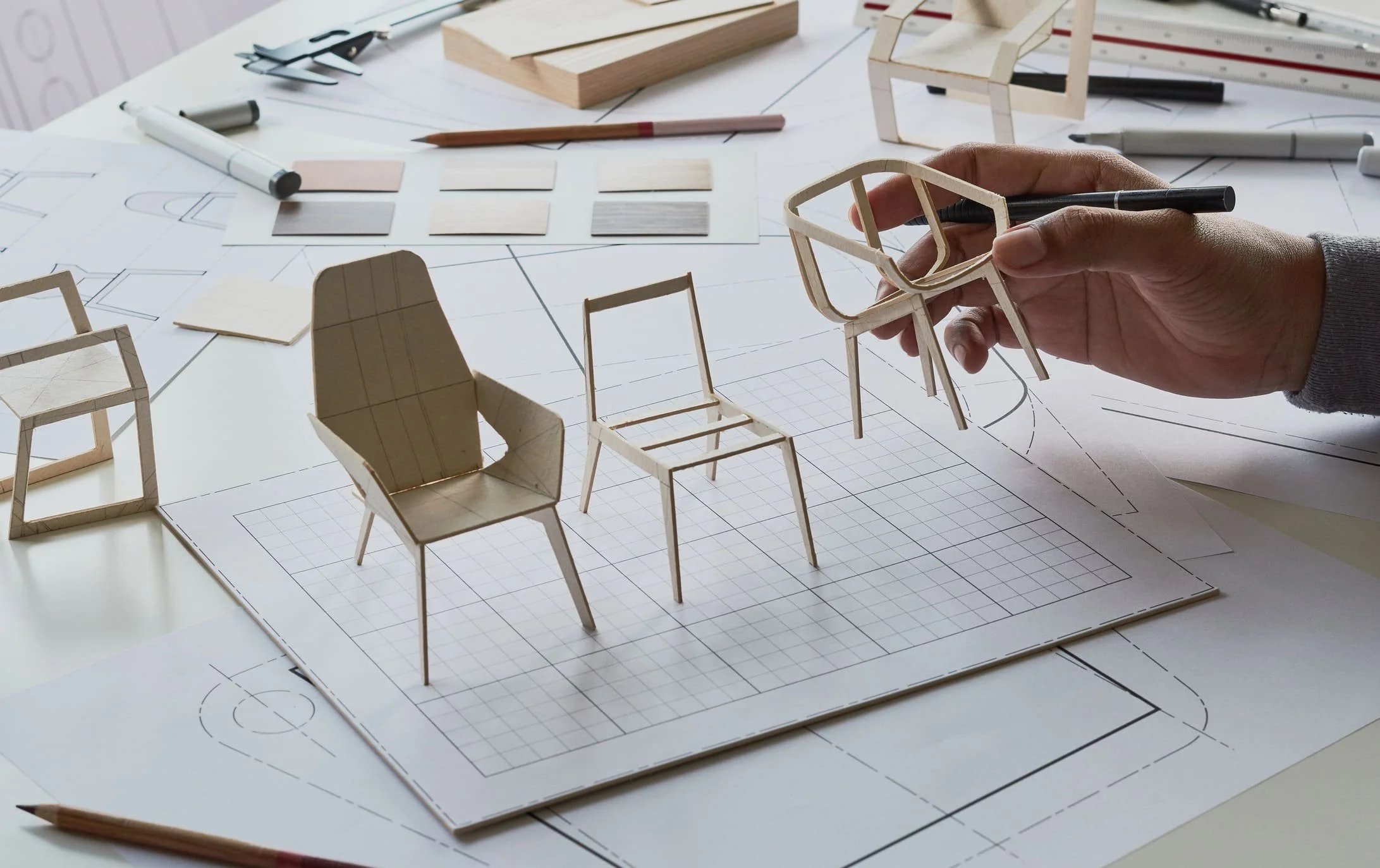
Create a Scaled Floor Plan
Professional designers rarely place furniture without first testing layouts.
Scaled Plans Help Visualize
Furniture placement
Room balance
Spacing requirements
Functional relationships
By working in scale, designers can determine whether furniture pieces fit comfortably before ordering.
This process dramatically reduces costly mistakes.
Map Traffic Flow
One of the most important parts of furniture planning is understanding how people move through a space.
Good Layouts Support Natural Movement
Designers evaluate:
Entry points
Walkways
Gathering areas
Connections between rooms
Access to windows and doors
The goal is to create a space that feels effortless and intuitive.
Poor traffic flow can make even expensive interiors feel uncomfortable.
Determine Furniture Sizes Before Selecting Products
Many homeowners fall in love with furniture before confirming dimensions.
Designers typically do the opposite.
Questions Designers Ask
Include:
How large should the sofa be?
What dining table size works best?
How much clearance is needed?
Will the room support oversized furniture?
Should pieces be custom-sized?
Determining ideal dimensions first helps narrow product selections later.
Establish Focal Points
Most rooms have a natural focal point.
Common Examples Include
Fireplaces
Views
Architectural details
Feature walls
Artwork
Entertainment systems
Furniture layouts are often organized around these focal points.
This creates a sense of balance and purpose within the room.
Test Multiple Layout Options
Professional designers rarely settle on the first layout.
Alternative Layouts May Explore
Different seating arrangements
Multiple conversation zones
Improved functionality
Better visual balance
Enhanced traffic flow
Sometimes a small adjustment can dramatically improve how a room feels and functions.
Consider Scale and Proportion
Beautiful interiors rely on balance.
Designers Evaluate
Furniture scale
Ceiling height
Room volume
Visual weight
Architectural proportions
A room with high ceilings may require larger pieces than a room with lower ceilings.
The goal is to create a layout that feels appropriately scaled to the architecture.
Coordinate Furniture With the Entire Design Plan
Furniture planning doesn't happen in isolation.
Designers also consider:
Lighting plans
Area rugs
Window treatments
Artwork
Built-ins
Finishes
Architectural details
Every element should work together as part of a cohesive design strategy.
Why Layout Planning Saves Time and Money
Proper planning often prevents expensive mistakes.
Benefits Include
Fewer ordering errors
Better furniture fit
Improved functionality
More efficient procurement
Better project timelines
Reduced redesign costs
Many furniture issues can be avoided entirely through careful space planning.
What Furniture Layout Planning Looks Like at Loczi Design
At Loczi Design, furniture planning is an important part of the overall design process.
Before furnishings are sourced or purchased, layouts are carefully developed to support:
Daily living
Entertaining
Traffic flow
Architectural features
Long-term functionality
By starting with thoughtful space planning, the design team can ensure that every furniture selection contributes to a cohesive, highly functional, and visually refined environment.
This process helps clients avoid costly mistakes while creating spaces that feel both beautiful and effortless to live in.
Common Mistakes to Avoid
Many homeowners encounter problems when furniture is purchased before a layout is finalized.
Common mistakes include:
Buying furniture that is too large
Overcrowding rooms
Ignoring traffic flow
Choosing pieces individually instead of as a collection
Failing to measure accurately
Neglecting room functionality
Ordering before reviewing scaled plans
Furniture should support the space—not dictate it.
Frequently Asked Questions
-
Yes. Most professional designers develop layouts and determine ideal furniture sizes before purchasing products.
-
Scaled plans help ensure furniture fits properly and supports both functionality and aesthetics.
-
It varies by project, but many designers explore multiple layouts before finalizing a recommendation.
-
Absolutely. Designers often begin space planning using architectural drawings long before furniture is ordered.